
Dental articulator for dental practice and crown bridge work with Korean jaw simulator, adjustable split design for three-dimensional 2mm and 3mm settings and plaster-less mounting for dental technicians


Dental articulator for dental practice and crown bridge work with Korean jaw simulator, adjustable split design for three-dimensional 2mm and 3mm settings and plaster-less mounting for dental technicians
Korean Dental Articulator with Adjustable 2mm and 3mm Settings for Crown and Bridge Work

This dental articulator, designed with a Korean jaw simulation profile, serves as a fundamental tool in dental laboratories and educational settings. Its primary function is to accurately replicate mandibular movements, providing a stable platform for mounting dental casts during the fabrication and assessment of crowns, bridges, and other restorations. The articulator's value lies in its adjustable mechanism, which allows technicians to configure the device to specific dimensional requirements, supporting a more tailored approach to occlusion analysis and restoration fitting without the need for plaster in the mounting process.
Features and Construction
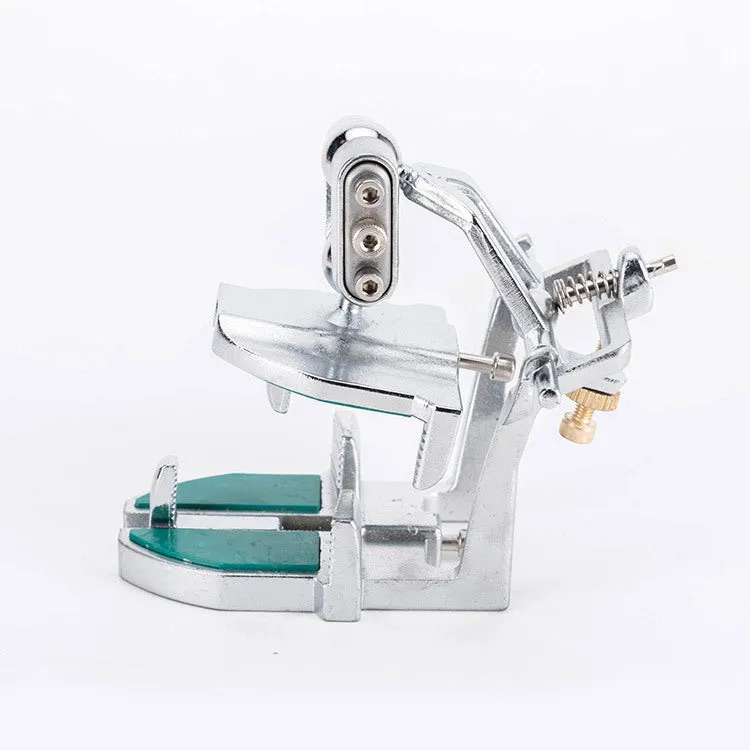
The articulator's design is centred on practical functionality for dental professionals. It incorporates a specific anatomical reference point often associated with Korean dental articulator systems, which aim to simulate realistic jaw dynamics. The build is focused on providing a stable base for dental models during technical work.
Material and Build
The articulator is constructed from materials commonly used in dental laboratory equipment, chosen to provide the necessary strength and stability to hold dental casts securely. The construction prioritises a rigid frame that can withstand the pressures involved in articulating models, ensuring the casts remain in precise alignment throughout the laboratory workflow. The design facilitates a plaster-less mounting system, which can help reduce setup time and material use in the lab.
Size and Practical Fit
A key operational feature is the adjustable split mechanism, which offers configurable settings. Specifically, it can be set to either a 2mm or a 3mm dimension, allowing the dental technician to adapt the articulator's range of motion and spatial relationships to suit the specific requirements of different dental cases, such as varying crown heights or bridge spans. This adjustability is a practical differentiator for customising the simulation to the patient's model.
Uses and Placement

This tool is intended for professional and educational environments where accurate dental model articulation is required. Its application is directly tied to restorative dentistry processes and skill development.
Event or Professional Use
In a professional dental laboratory, this articulator is used for the precise mounting and articulation of dental casts. It is directly applicable to the workflow for creating crowns and bridges, where verifying the fit and occlusion of the restoration against the opposing dentition is a critical step. The adjustable settings allow the technician to simulate different bite scenarios or spatial conditions relevant to the specific prosthetic case.
Everyday Home Use
This product is not designed for home or consumer use. Its application is strictly within professional, educational, or vocational training contexts, such as dental technology courses, where students learn the principles of articulation and restoration fabrication using simulation models.
Benefits and Buying Value
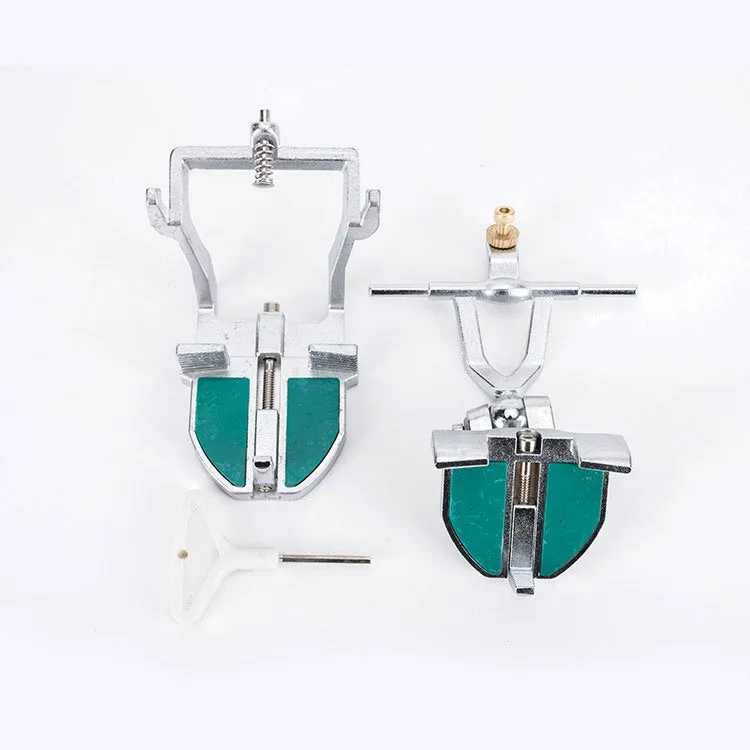
The value of this articulator is derived from its role as a specialised tool that supports accurate dental work, with features aimed at improving procedural efficiency in a lab setting.
Reuse and Low Maintenance
As a durable laboratory instrument, the articulator is designed for repeated use across multiple dental cases. Its maintenance typically involves standard cleaning protocols used for dental lab equipment to keep it free of debris and plaster residues. The mechanical components, like the adjustable split, are built for repeated adjustment cycles throughout its service life in a lab environment.
Why Choose This Product
This Korean-style articulator offers a combination of anatomical simulation and practical adjustability. The ability to switch between 2mm and 3mm settings provides a degree of versatility for handling different clinical presentations, which can be particularly useful for labs dealing with a variety of crown and bridge cases. The plaster-less mounting feature presents a potential workflow efficiency, reducing the time and materials needed for model attachment compared to traditional plaster-based methods.
